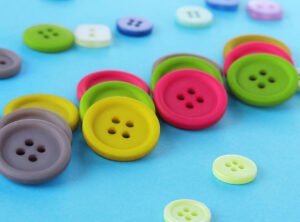
A garment button is expected to do more than complete the appearance of a product. It must remain intact during sewing, withstand normal handling, retain its intended appearance and perform consistently during the life of the garment. For Button Manufacturers in India, quality testing is therefore an essential part of manufacturing rather than a final visual exercise. Buttons can encounter different conditions during their use and after they leave the manufacturing facility. Depending on the application, they may be exposed to sewing stress, impact, heat during pressing, washing, dry cleaning, friction and repeated handling. A button can appear flawless during a visual inspection and still fail when subjected to one of these conditions. This is why Button Manufacturers in India evaluate multiple characteristics instead of relying on one quality check.
Established industry test methods also recognise that button performance depends on several factors. Tests for plastic sew-through buttons, for example, evaluate resistance to impact and take characteristics such as size, thickness, shape, hole configuration and material into account. Other test methods examine a button’s response to dry-cleaning conditions, including changes in colour, finish and physical condition. For Button Manufacturers in India, these testing principles provide a practical framework for evaluating whether a finished polyester button is suitable for its intended application.
Quality testing of garment buttons covers the appearance, physical condition and performance of the finished product. For polyester buttons, relevant checks can include surface inspection, resistance to breakage, colour stability, finish retention, hole quality and behaviour under specific garment-care conditions. The exact tests required depend on the button design, material, intended use and requirements agreed with the buyer. A button intended for regular everyday use may require a different evaluation approach from one intended for garments that undergo frequent pressing or dry cleaning.
At Classic Buttons Pvt. Ltd., one of the leading Button Manufacturers in India, quality checks form an important part of polyester button production. The company focuses on maintaining consistency in finished products so that buttons supplied against a defined requirement remain uniform in appearance and performance.
1. VISUAL INSPECTION IS THE FIRST QUALITY CHECK
Visual inspection is the first stage of evaluating finished buttons because many defects can be identified without specialised testing. Button Manufacturers in India inspect products for visible cracks, chips, scratches, irregular edges, surface marks, uneven finishing and other abnormalities that can affect the final appearance. For polyester buttons, surface condition is particularly important because the finish contributes significantly to the visual character of the product. A button can have the correct basic form and still be rejected if the surface contains noticeable defects. Visual inspection also helps identify problems that may point to an issue in an earlier stage of production.
2. IMPACT RESISTANCE TESTS BUTTON STRENGTH UNDER SUDDEN FORCE
Impact resistance examines whether a button can withstand a sudden force without breaking. This is different from simply checking whether the button appears strong during handling. Industry testing methods for plastic sew-through buttons specifically evaluate resistance to breakage under impact and recognise characteristics such as material, shape, size, thickness, number of holes and hole spacing as factors that can affect performance. For Button Manufacturers in India, impact resistance is therefore an important consideration when evaluating whether a polyester button can withstand the physical stresses it may encounter in use and during garment processing.
3. BUTTON STRENGTH MATTERS FOR SECURE ATTACHMENT
A button must remain securely attached during normal use. This makes resistance to the forces acting on a sewn button an important performance consideration. Evaluation of sew-through buttons can examine whether the button and its attachment can withstand the force applied without breaking or becoming detached. For Button Manufacturers in India, this is particularly relevant because the button ultimately forms part of a sewn assembly. The performance of the finished component depends on the relationship between the button, thread and material to which it is attached.
4. HEAT RESISTANCE IS RELEVANT DURING GARMENT PROCESSING
Buttons can be exposed to heat during pressing and other garment-finishing operations. This creates a different performance condition from ordinary room-temperature handling. A button may appear satisfactory during normal inspection but behave differently when exposed to elevated temperatures. Industry guidance on plastic button testing specifically recognises pressing as a condition that can influence button performance. Button Manufacturers in India therefore need to consider heat exposure when evaluating products intended for applications involving pressing or other heat-related processes.
5. COLOUR STABILITY IS AN IMPORTANT QUALITY PARAMETER
Colour is often one of the most noticeable characteristics of a button, but its importance extends beyond initial appearance. A button used in a finished product is expected to maintain its intended colour under the conditions associated with its application. Testing can therefore be used to determine whether significant colour change occurs after exposure to relevant cleaning or processing conditions. For Button Manufacturers in India, colour stability is particularly important where the visual identity of a product depends on a consistent button colour across a production quantity.
6. COLOUR TRANSFER SHOULD BE CHECKED SEPARATELY
Colour change and colour transfer are not the same issue. A button may show very little visible change itself but still transfer colour under particular conditions. Established testing methods for buttons therefore consider colour transfer separately from colour change. For Button Manufacturers in India, this distinction is important because unwanted colour transfer can affect the surrounding material even when the button itself still appears acceptable. Testing this characteristic provides information that cannot be obtained through ordinary visual inspection alone.
7. SURFACE FINISH NEEDS TO REMAIN CONSISTENT
A button’s surface finish contributes directly to its appearance and perceived quality. Depending on the product, the button may have a polished, glossy, matte, textured or decorative surface. If that finish deteriorates through cleaning, handling or other exposure, the appearance of the button can change even if its basic structure remains intact. Testing methods that evaluate plastic buttons after dry-cleaning conditions can consider loss of finish among the properties being observed. For Button Manufacturers in India, finish retention is therefore relevant whenever the surface appearance is an important part of the product specification.
8. SWELLING AND SOLUBILITY CAN REVEAL MATERIAL RESPONSE
Certain problems cannot be identified through ordinary inspection because they only become apparent after exposure to specific chemicals or cleaning conditions. Testing methods for buttons can evaluate properties such as swelling and solubility following exposure to dry-cleaning conditions. For Button Manufacturers in India, these checks can help determine how the button material responds to environments relevant to its intended use. Their importance depends on the application, but they illustrate why material behaviour needs to be considered alongside appearance and mechanical strength when evaluating finished polyester buttons.
9. HOLE QUALITY IS CRITICAL FOR SEW-THROUGH BUTTONS
The holes in a button are functional features and need to remain suitable for sewing. Their number, spacing, position and condition can influence how the button is attached and how forces are distributed through the sewn connection. Industry button testing methods identify hole number and spacing as factors that can influence performance. For Button Manufacturers in India, inspection therefore needs to extend beyond the external surface of the button. Blocked, damaged or irregular holes can interfere with sewing and may indicate a production issue that needs to be addressed before the buttons are supplied.
10. EDGE UNIFORMITY CONTRIBUTES TO FINISHED QUALITY
The outer edge of a button affects both appearance and handling. Uneven edges, rough areas or inconsistent finishing can become visible after the button is attached to the final product. These variations can be particularly noticeable when multiple buttons are positioned together. For Button Manufacturers in India, maintaining consistent edges forms part of finished-product inspection. Uniform edges indicate that the button has been processed correctly and help ensure that the product maintains the intended appearance when used in quantity.
11. TESTING SHOULD MATCH THE INTENDED APPLICATION
Not every button needs to be evaluated under the same conditions. The relevant testing approach depends on the button’s design, material, construction and intended use. A button intended for everyday clothing may not encounter the same conditions as one used on a product that is regularly dry cleaned or subjected to repeated pressing. This is why Button Manufacturers in India need to match testing requirements to the actual application. Industry methods cover different performance characteristics, including impact resistance and response to dry-cleaning conditions. Applying the relevant checks allows manufacturers to focus on the properties that matter for the intended product rather than treating every button specification in exactly the same way.
12. BATCH CONSISTENCY IS PART OF QUALITY
Quality cannot be established by examining a single button in isolation. When a large quantity is produced to one specification, the characteristics being checked need to remain consistent across the production batch. For Button Manufacturers in India, batch inspection helps identify variations in colour, finish, surface condition, shape and other relevant characteristics. This becomes particularly important for repeat orders, where buyers expect subsequent quantities to remain consistent with previously approved products. Classic Buttons Pvt. Ltd. places emphasis on consistency in repeat requirements, supporting customers who need buttons with the same basic appearance and specification across multiple orders.
13. QUALITY TESTING SUPPORTS CLEARER PRODUCT SPECIFICATIONS
Testing becomes more meaningful when the product requirement is clearly defined. A button specification can include its material, size, design, finish, construction and the performance properties relevant to its intended application. For Button Manufacturers in India, clear specifications help determine which characteristics need to be evaluated and what constitutes an acceptable result. This makes discussions between the manufacturer and buyer more precise and reduces the possibility of judging the same product on different expectations.
14. INSPECTION AND PERFORMANCE TESTING SERVE DIFFERENT PURPOSES
Inspection and testing should not be treated as interchangeable. Inspection focuses on identifying visible or measurable characteristics, while performance testing exposes the button to conditions designed to reveal how it behaves under specific stresses. For Button Manufacturers in India, combining both approaches provides a more complete assessment. A button may pass visual inspection and still require impact or cleaning-related testing, while a satisfactory performance result does not eliminate the need to inspect the finished surface and construction.
15. QUALITY TESTING HELPS IDENTIFY PROBLEMS BEFORE THE PRODUCT REACHES THE CUSTOMER
One of the practical benefits of testing is early identification of defects or performance issues. When a problem is discovered during production or finished-product evaluation, corrective action can be taken before the buttons move further into the supply chain. For Button Manufacturers in India, this makes quality testing part of manufacturing control rather than simply a final approval step. A structured approach helps distinguish between cosmetic defects, dimensional issues, material behaviour and performance-related failures, allowing each issue to be addressed appropriately.
Quality testing of garment buttons involves considerably more than checking whether a button looks attractive. A suitable evaluation can include surface inspection, impact resistance, attachment strength, heat behaviour, colour stability, colour transfer, finish retention, hole quality and response to relevant cleaning conditions. For Button Manufacturers in India, the appropriate testing approach depends on the button’s material, design and intended application. Visual inspection remains essential, but it should be supported by relevant performance evaluation wherever the application requires it. This provides a clearer understanding of how a button is likely to behave after it leaves the manufacturing facility.
Classic Buttons Pvt. Ltd. is one of the leading Button Manufacturers in India, specialising in polyester button manufacturing and serving customers with a range of button designs and specifications. Its production approach places importance on consistent finished products and repeatable requirements, supporting customers who require dependable polyester buttons for different applications. For buyers sourcing from a Polyester Button Manufacturer, understanding the relevant quality parameters helps in defining product requirements more clearly. For Button Manufacturers in India, maintaining these parameters consistently is what turns a visually acceptable button into a dependable finished component.